
Aquaponics
The productive core creates a symbiosis of fish and plant cultivation. Maximum resource efficiency. Minimal water.
Project Oasis
What is Project Oasis?
Project Oasis is our system concept for decentralised, resource-efficient food production. Instead of working against nature, we work with its own cycles, combined with smart structure. The project connects ecological innovation, social stabilisation, and climate protection. Modularly scalable.
Instead of fighting nature, we work with it.
Inside, we apply the principle of symbiosis: fish and plants supply each other with nutrients in an aquaponic system, while water is continuously filtered and reused. The geodesic dome greenhouse provides protection from extreme climate conditions. The result: maximum yields at minimal resource use.
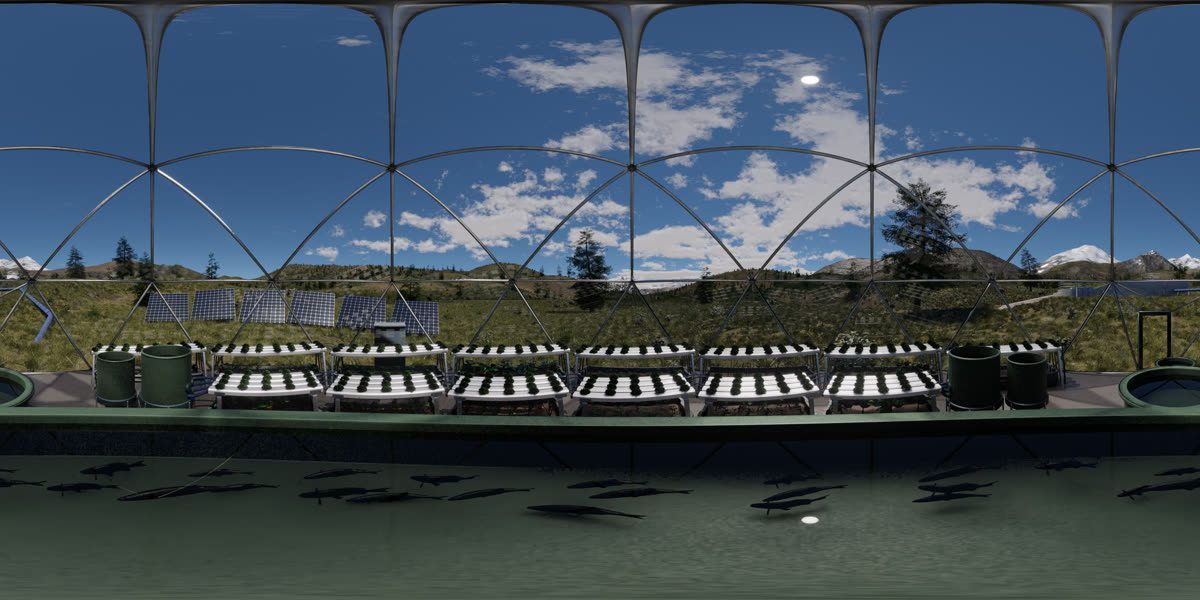
The system in detail
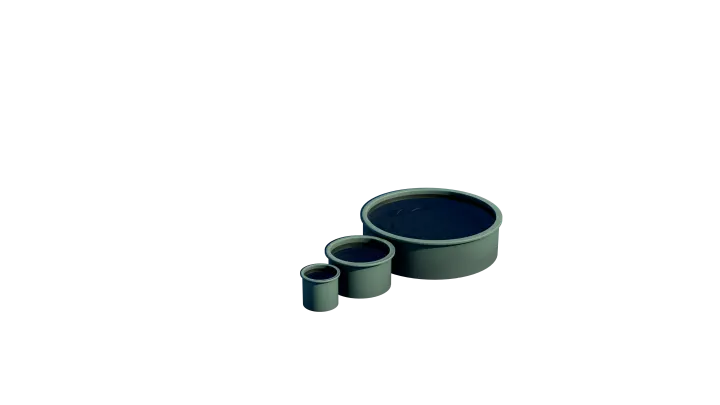
Every cycle begins in the water tanks: this is where the fish live, their waste continuously supplying the system with the essential nutrients it needs.
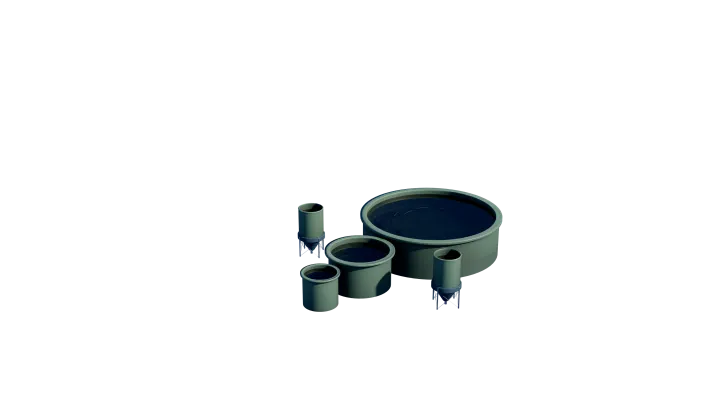
Bacterial cultures biologically transform the nutrient-rich water: ammonia is converted into plant-available nitrate before the water flows onwards.
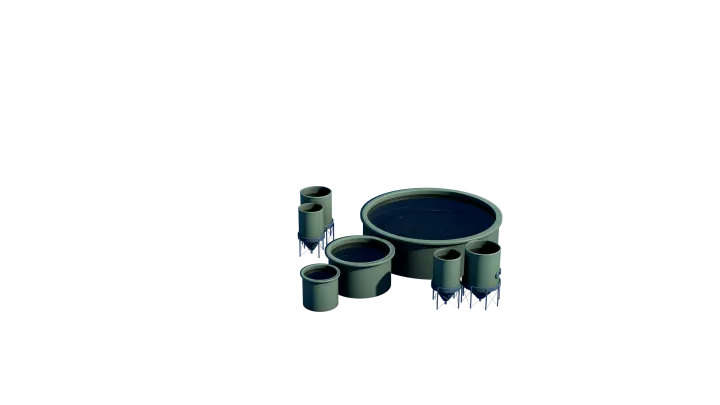
Solids such as feed residues and suspended particles are filtered out, so that clean water can flow on to the plants.
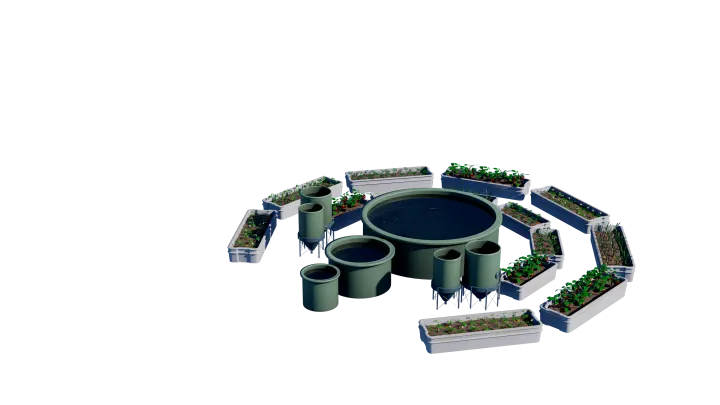
In the media bed, plants grow with their roots directly in the nutrient-rich water — no soil needed whatsoever.
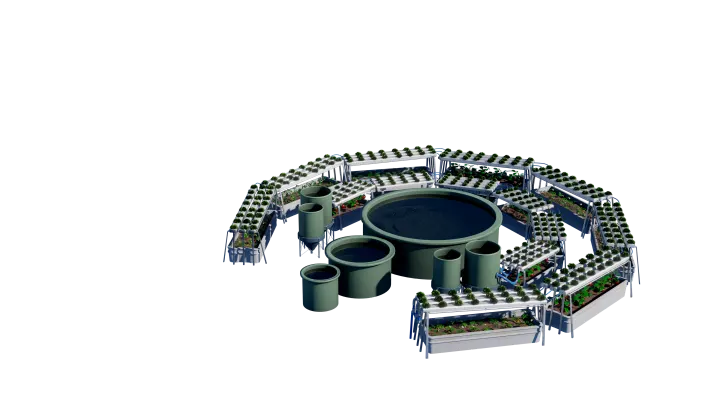
In the NFT channels, a thin film of water flows past the roots: space-saving, efficient, and exceptionally resource-friendly.
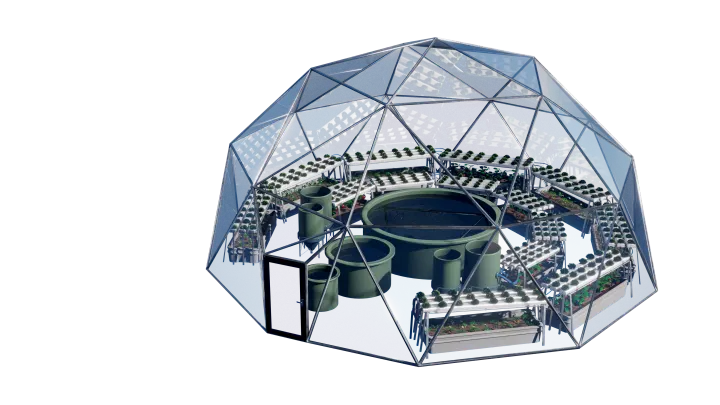
The geodesic dome seals the system from above and shields the entire installation from extreme weather conditions.
The modular system connects future-ready agriculture with climate protection and development work. Whether in social facilities or crisis regions: food production, soil regeneration, and reforestation create self-sufficient local cycles.
Because almost no water is consumed and production is local, dependence on unstable markets drops. Communities can secure their own basic supply — and stay resilient for the long term.
Project Oasis gives communities the foundation to secure their own basic supply — and remain resilient for the long term.
Our claim
We deliver the tools for genuine, long-term self-sufficiency.
The productive core creates a symbiosis of fish and plant cultivation. Maximum resource efficiency. Minimal water.
The geodesic architecture provides maximum structural stability with minimal material use. It creates the protective space for a climate-resilient microclimate.
The regenerative extension in the surrounding area systematically rebuilds degraded soils. It promotes local biodiversity and protects the installation naturally.
Scientific monitoring and targeted training form the social foundation. We empower communities to operate the systems independently and sustainably.
Project Oasis is based on a closed, resource-efficient production cycle that connects plant cultivation and fish farming. Water and nutrients do the work: external inputs are reduced, efficiency is maximised.
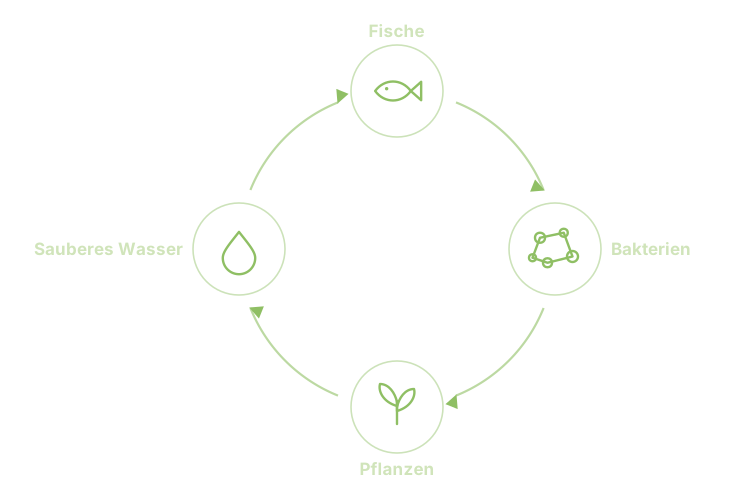
Nutrients from fish farming serve as a natural fertiliser source for the plants, which in turn purify the water — which then flows back into the fish cycle.
The construction enables a controlled environment, stabilising yields even in climatically difficult conditions such as heat or drought.
In suitable regions, surrounding land is used to improve soil quality, increase biodiversity, and enhance water retention capacity.
The system is designed as decentralised, locally operable infrastructure with minimal dependence on global markets.
The short version
Massive water savings and local production dramatically reduce dependence on unstable markets.
In regions particularly vulnerable to climate change or with weak infrastructure, the system helps stabilise local food production.
Planned for use in social facilities such as youth and educational centres, food banks, and emergency shelters — connecting food production directly with educational work.
In cooperation with scientific partners, the system is evaluated and adapted to different conditions. These projects serve data collection and optimisation.
Local production reduces dependence on imported food and centralised supply structures. In vulnerable regions, this is what keeps basic supply stable.
Complementary permaculture elements create more stable microecosystems and improved soil quality — increasing long-term water retention capacity in the immediate surroundings.
Training and local involvement build skills and competencies. This strengthens independent value creation and sustainably reduces structural dependencies.
Global supply chain crises and increasing extreme weather events reveal the vulnerability of centralised systems. Decentrally operated modules create independent, locally controlled structures.
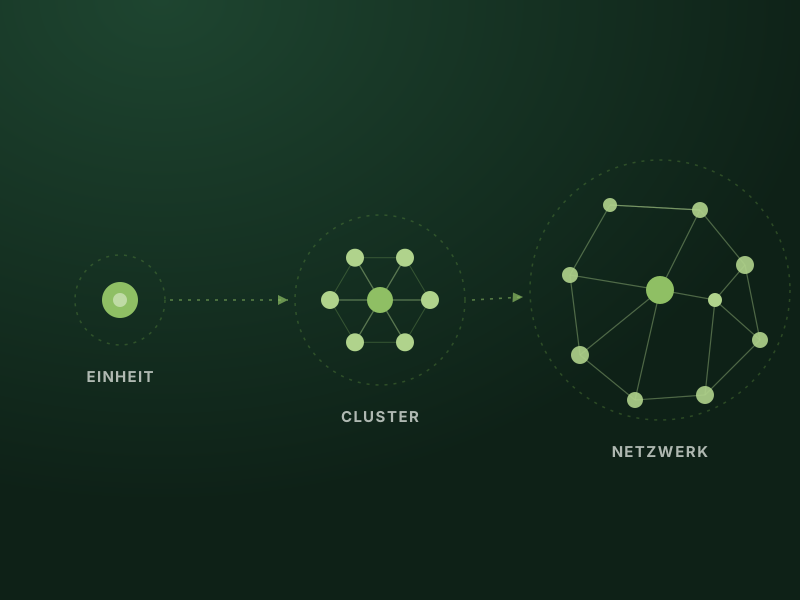
Project Oasis is built for the long term. The modular design allows for different scales — from smaller units for social facilities to larger clusters in structurally weak regions. Scaling does not necessarily mean centralisation, but the multiplication of decentralised units.
The future perspective lies in combining local self-sufficiency with global knowledge transfer. Through documentation, scientific monitoring, and international cooperation, the system can be continuously developed.
Project Oasis does not see itself as the sole solution to global food challenges, but as a scalable building block within a broader transformation towards more resilient and sustainable food systems.
A system on paper feeds no one. What it takes is manageable — and you can be part of it.
Every module of Project Oasis costs money before it yields a harvest. Your donation or sponsorship turns that into a real installation.
From trades to process engineering to scientific monitoring: a modular system is not built at a desk alone.
Aquaponics needs explaining. Anyone who gets it and passes it on opens the next door.